Road to Virtuosity is a sheet music library and performance-tracking platform designed to help pianists grow through real repertoire. Instead of treating sheet music as isolated files, Road to Virtuosity organizes music by difficulty level, point value, composer, style, and collection so students can clearly see where each piece fits in their musical journey.
The goal is simple: make piano progress easier to understand, easier to measure, and more motivating over time. Students can learn pieces, submit performance videos, earn points, build a repertoire record, and track their growth through a structured progression system.
One of the main strengths of Road to Virtuosity is the quality of our non-commercial sheet music. Many of these scores are carefully prepared or edited specifically for Road to Virtuosity, with clean modern engraving, readable spacing, practical layouts, polished formatting, and a clear educational presentation. These scores are designed for real practice situations: easy to read, easy to study, and useful for students, teachers, and performers.
Road to Virtuosity is not only about downloading sheet music. It is about building a visible record of musical achievement. Each piece has a level and point value based on its musical and technical demands. As students complete repertoire, they earn points and move forward through the system. This gives students, parents, and teachers a clearer picture of long-term progress.
The platform also includes performance submissions, leaderboards, certificates, and student profiles. These features help turn practice into a more structured and motivating experience. Students can see what they have completed, what level they are working toward, and how their repertoire fits within the larger Road to Virtuosity system.
Road to Virtuosity was founded by Michael Kravchuk, a pianist, teacher, composer, arranger, and music educator. The platform has grown with the help, feedback, and contributions of many pianists, teachers, performers, and students who share the goal of making musical progress more visible, structured, and repertoire-based.
The Road to Virtuosity library includes three main copyright categories: Public Domain, Non-Commercial, and Copyrighted.
Public domain sheet music may be downloaded, printed, copied, shared, performed, arranged, republished, sold, or used commercially. Some public domain files may come from outside public domain sources. These files are provided for access, study, and repertoire tracking, but they are not always typed up by Road to Virtuosity and may not include Road to Virtuosity QR codes, formatting, or custom engraving.
Non-commercial sheet music may be downloaded, printed, studied, and performed for personal, educational, and non-commercial performance purposes. These scores are often carefully prepared or edited by Road to Virtuosity with modern engraving, clean layouts, readable spacing, and a polished educational presentation. They may not be sold, commercially redistributed, or used as part of a paid product without permission.
Copyrighted sheet music files are not provided for download on Road to Virtuosity. However, students may still use copyrighted piece pages to view repertoire details, submit performance videos, earn points, and track their progress. Students should use legally purchased sheet music, publisher editions, teacher-provided materials, or other lawful sources when preparing copyrighted works.
My name is Michael Kravchuk.
I discovered the piano at age fourteen and quickly became absorbed in it. I practiced three to four hours a day, driven by the belief that dedication alone would lead me toward mastery. For a long time, I felt confident in my progress — until I began to realize how limited my perspective was. Outside of my own practice room, there was no clear, objective way to understand where I truly stood or what meaningful progress actually looked like.
It was not until I entered college as a piano performance major that I began to understand what reaching a professional level really requires. I saw the depth of repertoire, technical consistency, discipline, and long-term musical development that serious musicians around the world had already built — often far earlier than I had.
If I had understood that reality sooner, I would have practiced harder and smarter, with a clearer understanding of how far I still had to go.
That realization became the foundation of Road to Virtuosity.
I wanted to create the kind of resource I wish had existed when I was younger — a place where pianists could access useful sheet music, explore repertoire organized by difficulty, and understand progress in concrete, honest terms.
Road to Virtuosity was built to make musical progress visible. By connecting sheet music, repertoire levels, performance submissions, points, certificates, and student profiles, it allows musicians to see what they have completed and what lies ahead.
The rankings and leaderboards are not the goal. They exist to reflect completed repertoire and to provide motivation, context, and recognition for sustained work.
Road to Virtuosity is my way of giving back to the next generation of pianists — helping them understand earlier than I did what it means to build skill, grow through repertoire, and walk the road to virtuosity.
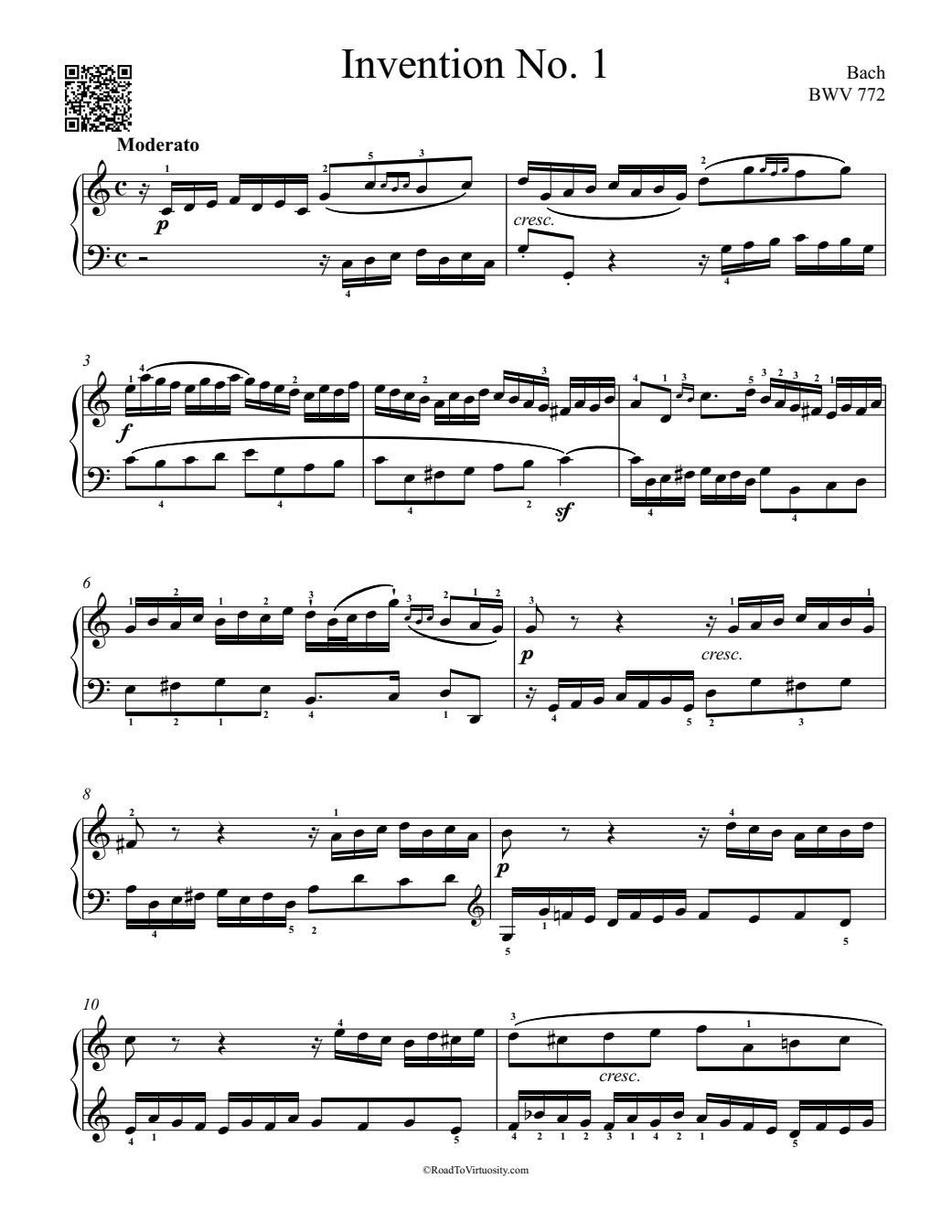
Yes. Creating an account is free, and many sheet music files on Road to Virtuosity are free to access. Public domain sheet music may be downloaded, printed, copied, shared, performed, arranged, republished, sold, or used commercially. These files are provided for access and repertoire tracking, but they are not always created, typed up, or formatted by Road to Virtuosity. Non-commercial sheet music is also free to download and use for personal, educational, and non-commercial performance purposes. These scores are often carefully edited or prepared by Road to Virtuosity, with clean modern engraving, readable layouts, and practical formatting for students and teachers. However, non-commercial sheet music may not be sold, commercially redistributed, or used as part of a paid product without permission. Copyrighted sheet music files are not provided for download.
Most sheet music sites focus mainly on file distribution or community uploads. Road to Virtuosity focuses on repertoire organization, difficulty measurement, performance progress, and high-quality learning materials. Many Road to Virtuosity non-commercial scores are carefully edited with modern engraving, clean spacing, readable notation, and practical formatting. The goal is not just to provide a file, but to make the music easier to read, easier to study, and more useful for students and teachers. Each piece is also organized by level, point value, composer, style, and collection. Students can submit performances, earn points, build a repertoire record, and track long-term musical growth.
Sheet music and piece pages are organized by difficulty level, point value, composer, genre, style, collection, and other musical characteristics. This makes the library easier to explore at every stage, from early beginner repertoire to advanced concert works.
Difficulty is determined by the real technical, physical, and musical demands of a piece. Factors such as coordination, texture, tempo, endurance, control, reading complexity, hand independence, musical maturity, and overall performance difficulty are taken into account.
RTV points are a repertoire-based measurement system designed to show how much musical skill, technical control, reading ability, coordination, endurance, and musical maturity a pianist needs to perform a piece successfully. A very easy piece may be worth only a small number of points, while advanced repertoire can be worth hundreds of thousands or even millions of points. This reflects the reality that musical difficulty increases dramatically at higher levels.
Points are earned by learning pieces, recording performances, and submitting them for verification. Once a performance is approved, the piece is added to the student’s personal repertoire record, and the corresponding points are awarded to the student’s profile.
No account is required to browse the library or access many available sheet music files. An account is only needed to submit performances, earn points, track progress, appear on leaderboards, and receive certificates on a personal profile page.
No. Road to Virtuosity is not a traditional competition. Rankings and leaderboards reflect completed repertoire and accumulated points. They exist to provide context, motivation, and transparency — not to judge talent or declare final winners. The main goal is personal progress through repertoire.
Yes. Road to Virtuosity offers a certificate program based on completed repertoire and verified performances. Certificates are designed to recognize real musical progress, not just participation. The program also includes advanced certificate goals for students who complete large amounts of demanding repertoire over time.
Road to Virtuosity was founded by Michael Kravchuk, a pianist, teacher, composer, arranger, and music educator. The platform has grown with the help, feedback, and contributions of many pianists, teachers, performers, and students who share the goal of making musical progress more visible, structured, and repertoire-based.
Road to Virtuosity uses three main copyright categories.
Public Domain means the sheet music may be downloaded, printed, copied, shared, performed, arranged, republished, sold, or used commercially. Some public domain files may come from outside public domain sources and are provided for access, study, and repertoire tracking. They are not always typed up by Road to Virtuosity and may not include Road to Virtuosity QR codes, formatting, or custom engraving.
Non-Commercial means the sheet music may be downloaded, printed, studied, and performed for personal, educational, and non-commercial performance purposes. These scores are often carefully prepared or edited by Road to Virtuosity with modern engraving, clean layouts, readable spacing, and a polished educational presentation. They may not be sold, commercially redistributed, or used as part of a paid product without permission.
Copyrighted means Road to Virtuosity does not provide the sheet music file for download. Students may still use the piece page to view repertoire details, submit performances, earn points, and track progress.
Yes. Students may earn points for copyrighted music by submitting a performance for verification. Road to Virtuosity does not need to provide the copyrighted sheet music file in order for students to track progress. Students should use legally purchased sheet music, publisher editions, teacher-provided materials, or other lawful sources when preparing copyrighted works.
No. Road to Virtuosity includes different types of sheet music files. Some scores, especially non-commercial Road to Virtuosity editions, are carefully prepared, edited, or arranged by our team. These scores are designed to be clean, modern, readable, and practical for students, teachers, and performers. Other public domain files may come from outside public domain sources. These files are provided for access, study, and repertoire tracking, but they are not always typed up by Road to Virtuosity and may not include Road to Virtuosity QR codes, formatting, or custom engraving.
Road to Virtuosity requires users to connect or provide a YouTube channel for several important reasons.
First, it helps protect Road to Virtuosity from bots, spam accounts, and duplicate registrations. YouTube channels are unique, and requiring one adds an extra layer of identity verification without requiring Road to Virtuosity to build a separate messaging or identity system from scratch.
Second, Road to Virtuosity does not currently provide a built-in comment or private messaging system between users. YouTube already has tools for comments, channel identity, moderation, reporting, and account management. Connecting users through YouTube allows video-related interaction to happen in a safer and more familiar environment.
Third, Road to Virtuosity is built around performance videos. A YouTube channel gives each student a clear video identity that can be connected to their submitted performances, public repertoire record, and long-term musical progress.
Road to Virtuosity does not permanently host performance videos directly on this website. If a student records or uploads a video through Road to Virtuosity, the video may be reviewed and then uploaded to an unlisted Road to Virtuosity YouTube channel for storage, playback, verification, and performance tracking. This helps keep the website faster, safer, and easier to maintain. It also allows Road to Virtuosity to manage videos through YouTube’s existing video infrastructure instead of storing large video files directly on the site. Videos submitted for evaluation may be used to verify performances, award points, build a student’s repertoire record, and display approved performances according to the site’s submission rules and privacy settings. Unapproved videos may be deleted after review.